
Articles and Learning
Featured Article
Initia Risk Shortlisted in Two #RISK Awards 2026 Categories
Initia Risk has been shortlisted in two #RISK Awards 2026 categories: Enterprise Integrated GRC Architecture for the platform, and Technology Innovation in GRC: SME for founder Elliot Poublan.
5–10 minutes · 15 questions
Where does your RCSA actually stand?
A maturity rating across methodology, first-line ownership, scoring, actions and reporting. No sales call required - take the diagnosis back to the team.
All Articles
What Is the Three Lines of Defence Model in Risk Management?
Who owns risk? Who oversees it? Who provides independent assurance? The Three Lines of Defence model answers all three - and it's the framework your board and regulators expect to see in action.
GRC Software Comparison 2026: Pricing, Criteria & Alternatives
A buyer guide for risk management tools and GRC platforms. What mid-market firms should look for, when to leave spreadsheets, and how to avoid overbuying enterprise suites.
10 Questions to Ask GRC Vendors in 2026
A practical question set you can use in GRC RFPs, demos, and vendor meetings - focused on methodology, implementation, pricing, and board-ready reporting for mid-market organisations.

Best GRC Software for Mid-Market in 2026: 5 Platforms Compared
Shortlisted the best risk management tools and GRC software for mid-market organisations. Enterprise suites, point tools and right-sized platforms compared - and when Initia Risk is the better fit.
Is GRC Worth It? The Financial Case for Enterprise Risk Management
Evidence shows that mature GRC frameworks pay off - both by avoiding costly fines and by unlocking value through better valuations, lower financing costs, and operational efficiency. Here's what the numbers tell us.
How to Build an ERM Framework: The Essential Guide
Enterprise Risk Management doesn't have to be complicated. Here's how to build a structured ERM framework that actually works - from documenting your approach to making sure everyone uses it.
How to Assess Enterprise Risk: A Practical Guide for ERM Teams
From judgement-based scoring to quantitative modelling - a clear guide to the four main risk assessment approaches, when to use each, and how to choose the right level of sophistication for your ERM programme.
How ERM Teams Produce Consistent, Board-Ready Risk Reports on a Recurring Cadence
How ERM teams run board reporting as a repeatable process: pack structure, week-by-week cadence, and the mistakes that break consistency. For what boards and regulators require in the pack, see our board-level reporting guide.

GRC Software Pricing 2026: Module, Per-Seat & Hybrid Compared
How do GRC vendors price their platforms in the UK? A clear guide to module-based pricing, per-seat licensing and hybrid models - and what to look for when comparing GRC software quotes.
What Is an RCSA? Meaning, Process & Why Most Fail
RCSA and risk and control assessment are the same job under different names. Most programmes look fine on paper; in practice they become calendar exercises that exhaust the first line and rarely change decisions. Here is what risk and control assessment is, why it exists, where it breaks, and what good looks like.
How to Run Risk and Control Assessment (RCSA): Step-by-Step
A practical sequence for risk and control assessment and RCSA: define risks, map controls, assess design and effectiveness, close gaps, and track actions. How to run the process so the first line engages and the output holds up to scrutiny.
Excel vs GRC Tools for Risk and Control Assessment (RCSA): When Should You Move?
Excel is where most risk and control assessment and RCSA programmes start - and for good reason. Here is when spreadsheets are enough, when they break, the signs you have outgrown them, and what to look for in a GRC tool without enterprise bloat.
Inherent vs Residual Risk vs Appetite Explained
Inherent risk (before controls), residual risk (after controls), and risk appetite (what you are willing to accept). Practical definitions for ERM and RCSA scoring - without the gross/net confusion.
What Is a Risk Rating? Definition, Formula and How to Calculate It
A risk rating is the output of assessing how likely a risk is and how bad it would be - derived from financial and non-financial impact and likelihood matrices, then Likelihood × Impact on a 5×5 scale. This guide explains the formula, the matrices underneath, rating bands, and where ratings typically break down.
The 5×5 Risk Matrix and Heat Maps: What Boards See - and What the Numbers Hide
Heat maps remain a staple of committee packs. This guide explains what they do well, where they mislead, how to define what sits under the grid, and how they relate to assessment, ownership, and reporting-without treating the chart as a substitute for judgement.
How to Create Real Risk Ownership in Your Organisation
Every risk register has an owner column. Almost none of them reflect genuine accountability. Here is why risk ownership fails, what actually makes it stick, and why talking about money and strategic objectives is the fastest way to get the first line engaged.
Board-Level Risk Reporting: A Practical Guide
What boards and regulators expect in board-level risk reporting: eight components, governance expectations, and supervisory scrutiny. Pair with our cadence article for how ERM teams deliver the pack every quarter.
Risk and Compliance Expectations for Universities in 2026 - What Heads of Risk Need to Evidence
From OfS registration conditions and public interest governance to financial sustainability, cyber resilience, GDPR and freedom of speech - the challenge for university Heads of Risk is increasingly one of evidence and operating discipline, not just policy design.
Provision 29 of the UK Corporate Governance Code: An End-to-End Compliance Guide
From 1 January 2026, boards of UK premium-listed companies must publicly declare the effectiveness of their material internal controls. Here is what Provision 29 actually requires, the four control categories that matter, and a step-by-step roadmap to get there.

Provision 29 vs SOX: A 2026 Guide for UK and US Internal Controls
Provision 29 has been called "UK SOX". It is not. The two regimes share DNA but diverge on scope, assurance, materiality, sanctions and intent. Here is how they line up, where dual-listed companies should rationalise, and where they should not.

How to Identify Material Internal Controls Under Provision 29 (2026 Methodology)
The hardest decision in any Provision 29 programme is which controls are material. The FRC has deliberately not told you. Here is a working definition, a three-test methodology, a scoring rubric and a worked example for landing on a board-defensible inventory.

What Is GRC? Governance, Risk and Compliance Explained for 2026
Governance, Risk and Compliance (GRC) is a strategic approach to aligning IT and business with rules and risks. Here is what GRC actually means, how the three disciplines connect, and what good looks like in a mid-market firm.
What Is a Risk Register? Definition, Structure & Examples (2026)
A risk register is the canonical list of an organisation's risks, their owners, their scores, the controls that mitigate them and the actions in flight. Here is what it should contain, how it should be structured, and why most registers break down in practice.

7 Best Risk Management Software UK 2026 Compared
A practical UK shortlist of risk management tools and software for regulated firms in 2026. How enterprise platforms, point tools and right-sized alternatives compare - and how to choose without overbuying.
Best Risk Management Software for UK Startups & SMEs (2026)
Most risk software is built for enterprises with a six-figure budget and a consulting team. UK startups, scale-ups and SMEs need something simpler - and increasingly, something modern. A shortlist for 2026.
Risk Register Software (2026): Replace the Spreadsheet, Keep the Discipline
A risk register that lives in a shared spreadsheet works until it does not. Risk register software is what comes next: structured ownership, scoring, controls and audit trail, without losing the discipline that made the spreadsheet usable in the first place.
Enterprise Risk Assessment: Process, Methodology & Output (2026)
A project risk assessment looks at one piece of work. An enterprise risk assessment looks at the whole organisation - all risks, all owners, scored consistently, in one place. Here is the process, the methodology, and what good output looks like.

Soft Skills Matter: What to Look for Beyond Technical Compliance Expertise
When hiring compliance professionals, technical knowledge is only the starting point. Guest writer Lauren Eager-Hey on the soft skills that separate good hires from great ones.
What Is Operational Risk Software? Tooling, RCSA & Control Testing (2026)
Operational risk tooling is more than a risk register. It is the connected operating layer - register, RCSA, control testing, KRIs and risk events - that turns operational risk from a quarterly spreadsheet exercise into a defensible, board-ready profile. Here is what good operational risk software looks like and how to choose it.
What "Good" Looks Like Under Provision 29
Provision 29 moves from describing frameworks to defending their effectiveness. Guest writer Pamela Stacey, founder of GRC Catalyst, on what "good" actually looks like in practice - and why it is about coherence, not completeness.
Control Frameworks Explained: Types, Design and Effectiveness
Controls are where risk management becomes real. This full guide explains what internal controls and control frameworks are, the main types, what makes a control well-designed and effective, and how to design and test them - with worked examples.
Control Testing 101: How to Know if Your Controls Really Work
A control on a register is not assurance. This guide covers how to test design and operating effectiveness, what evidence counts, how often to test, and how results should change residual risk - not just fill a spreadsheet.
How to Build a Risk Appetite Statement That Actually Works
Most risk appetite statements are approved once a year and never seen again. Here is how to write one the board can actually use: clear thresholds, a split between appetite, tolerance and capacity, and a reporting rhythm that flags breaches instead of hiding them in prose.
What Is a Key Risk Indicator? KRIs, Thresholds and Reporting Explained
Most KRI pages report what already happened. A key risk indicator should move before the risk does. Here is how to choose indicators that predict, set thresholds tied to appetite, and report movement instead of a wall of colour.
Davies Selects Initia Risk to Strengthen Its Risk Framework
Davies, a specialist professional services and technology firm with more than 8,500 people across 20+ countries, has chosen Initia Risk as its risk and compliance platform.
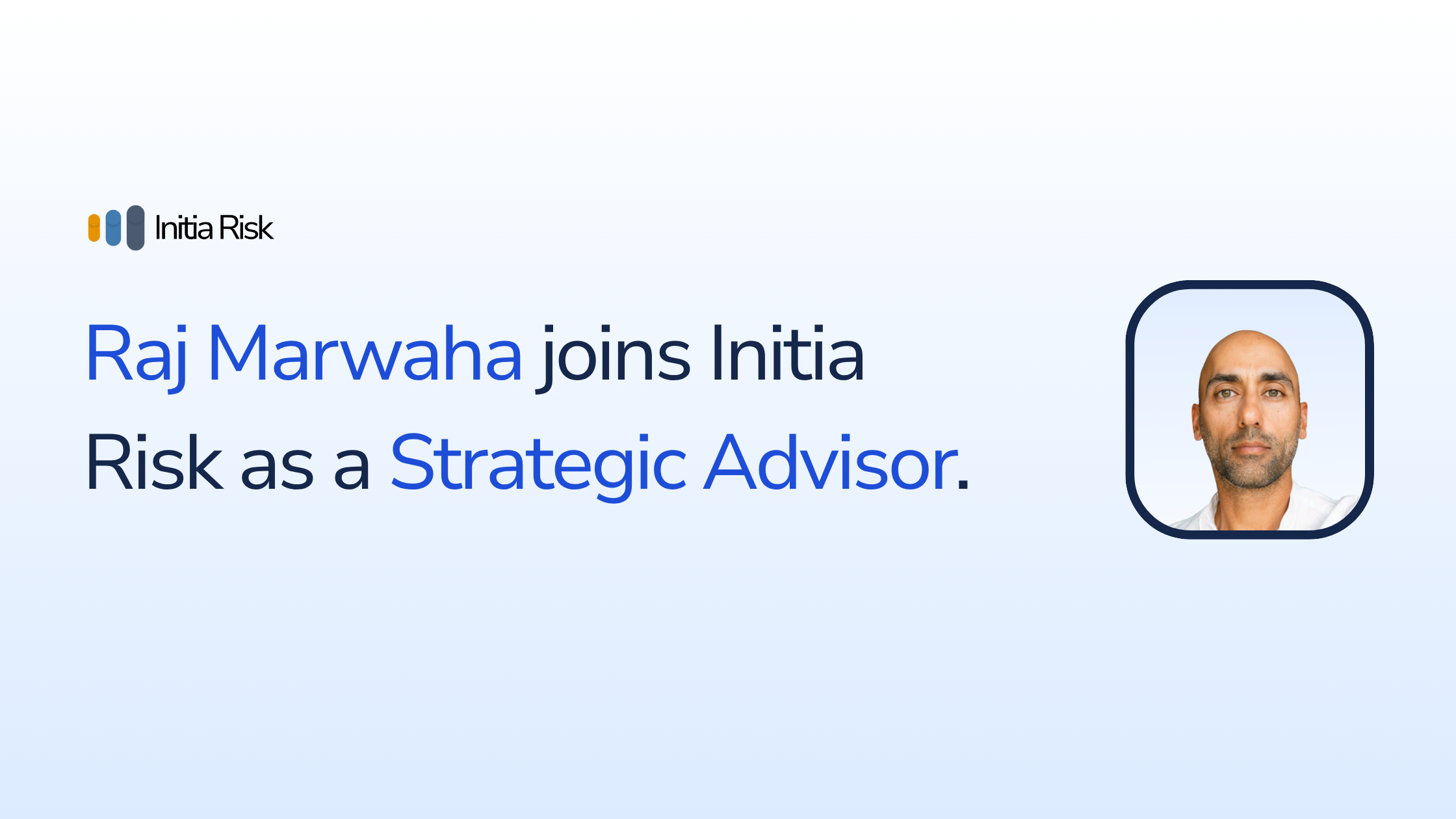
Rajeev Marwaha Joins Initia Risk as Strategic Advisor
Rajeev Marwaha joins Initia Risk as Strategic Advisor, bringing 20+ years in risk across building societies, banking and fintech - including time as a CRO - and the practitioner lens of Dharma Risk.
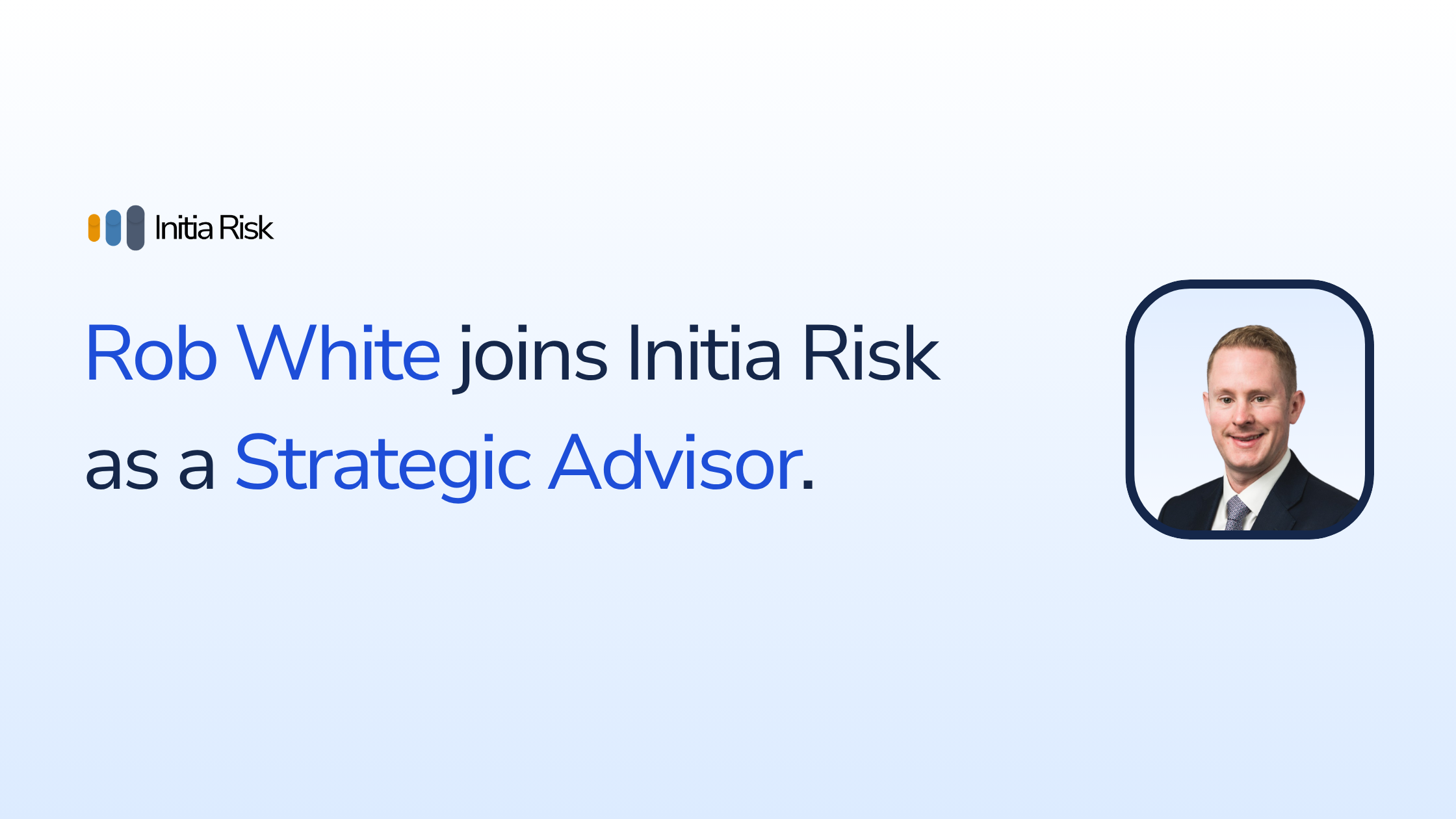
Rob White Joins Initia Risk as Strategic Advisor
Rob White joins Initia Risk as Strategic Advisor, bringing 15+ years as a practitioner CRO/CCO across insurance broking, banking and consulting - including his current role as Chief Risk & Compliance Officer, UK Retail at Acrisure.
Initia Risk Shortlisted for CIR Risk Management App of the Year
Initia Risk has been shortlisted for Risk Management App of the Year at the 2026 CIR Magazine Risk Management Awards - a one-year-old, practitioner-built platform recognised alongside established names in risk and compliance software.
Initia Risk Partners with COPA GRC to Support Regulated Football Clubs
Initia Risk is the technology partner behind COPA GRC, the football governance, risk and compliance proposition built for clubs entering the Independent Football Regulator regime.
Initia Risk Partners with GRAYFIELDS Executive Partnerships
GRAYFIELDS finds the people. Initia gives them the platform. A referral partnership for firms hiring senior risk, compliance and governance leaders into a tooling gap.
Control Design vs Operating Effectiveness
A control can be well designed and still not operate. Design effectiveness and operating effectiveness are different tests, and confusing them is how a testing programme gives a board false comfort.
How to Plan a GRC Implementation
The contract is signed and someone asks who owns the risk register. Name the pain the project has to fix, then plan five phases with a go-live test agreed before any data moves.
5–10 minutes · 15 questions
Where does your RCSA actually stand?
A maturity rating across methodology, first-line ownership, scoring, actions and reporting. No sales call required - take the diagnosis back to the team.